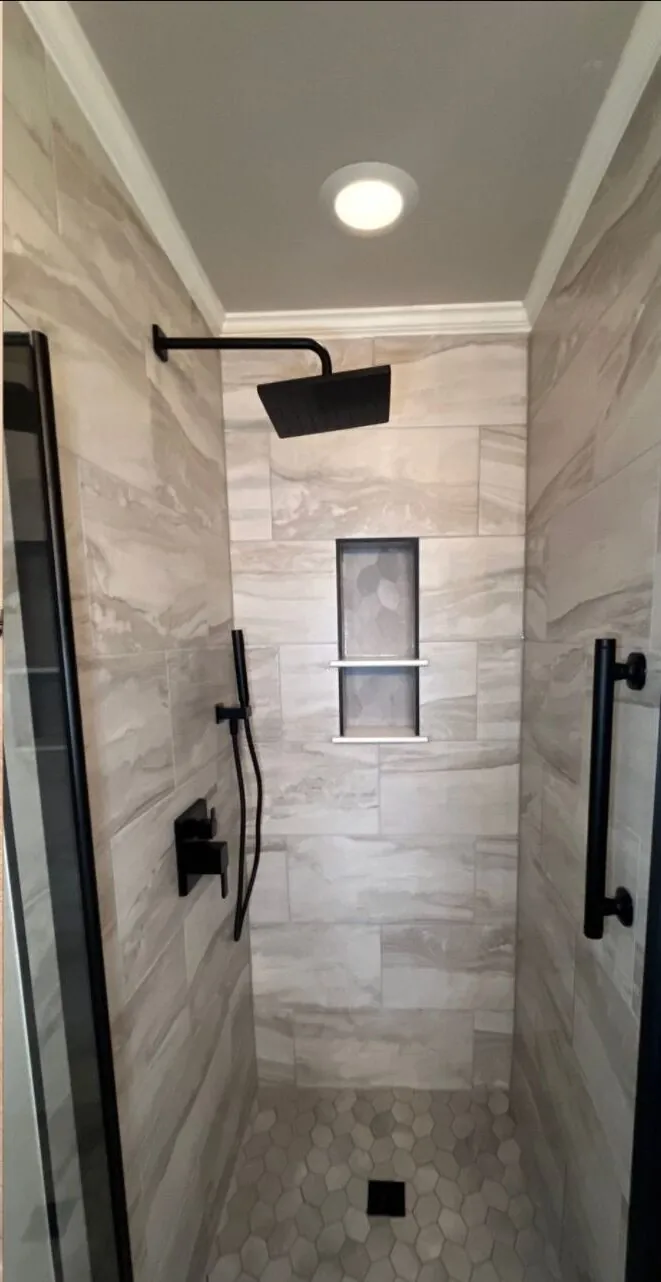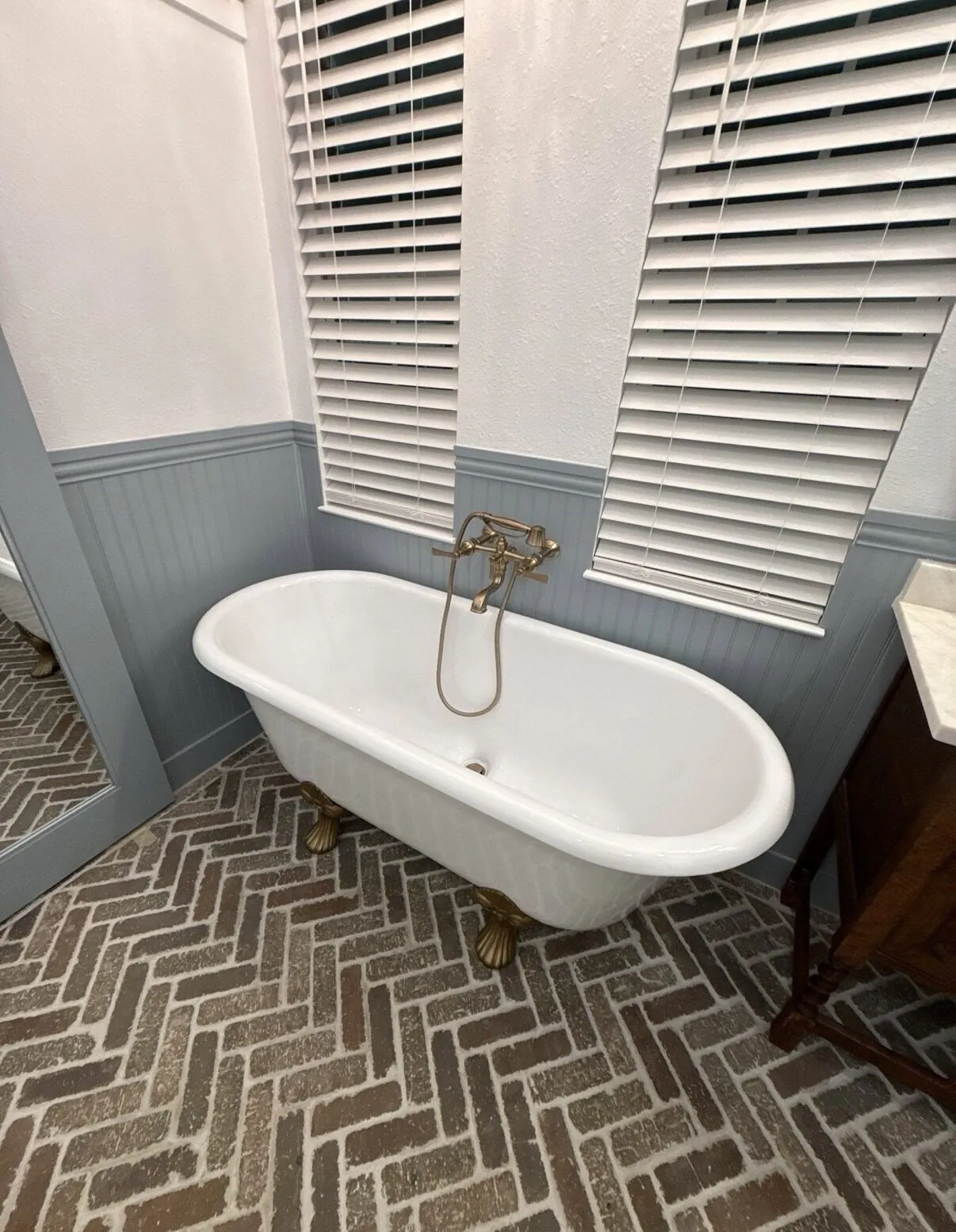
Bathroom
The wall behind your tile matters more than the tile
A wall half an inch out of plane will ruin a two-thousand-dollar tile order. Here is what it takes to fix one properly.
Written by TEXAN Home Improvements
3 min read
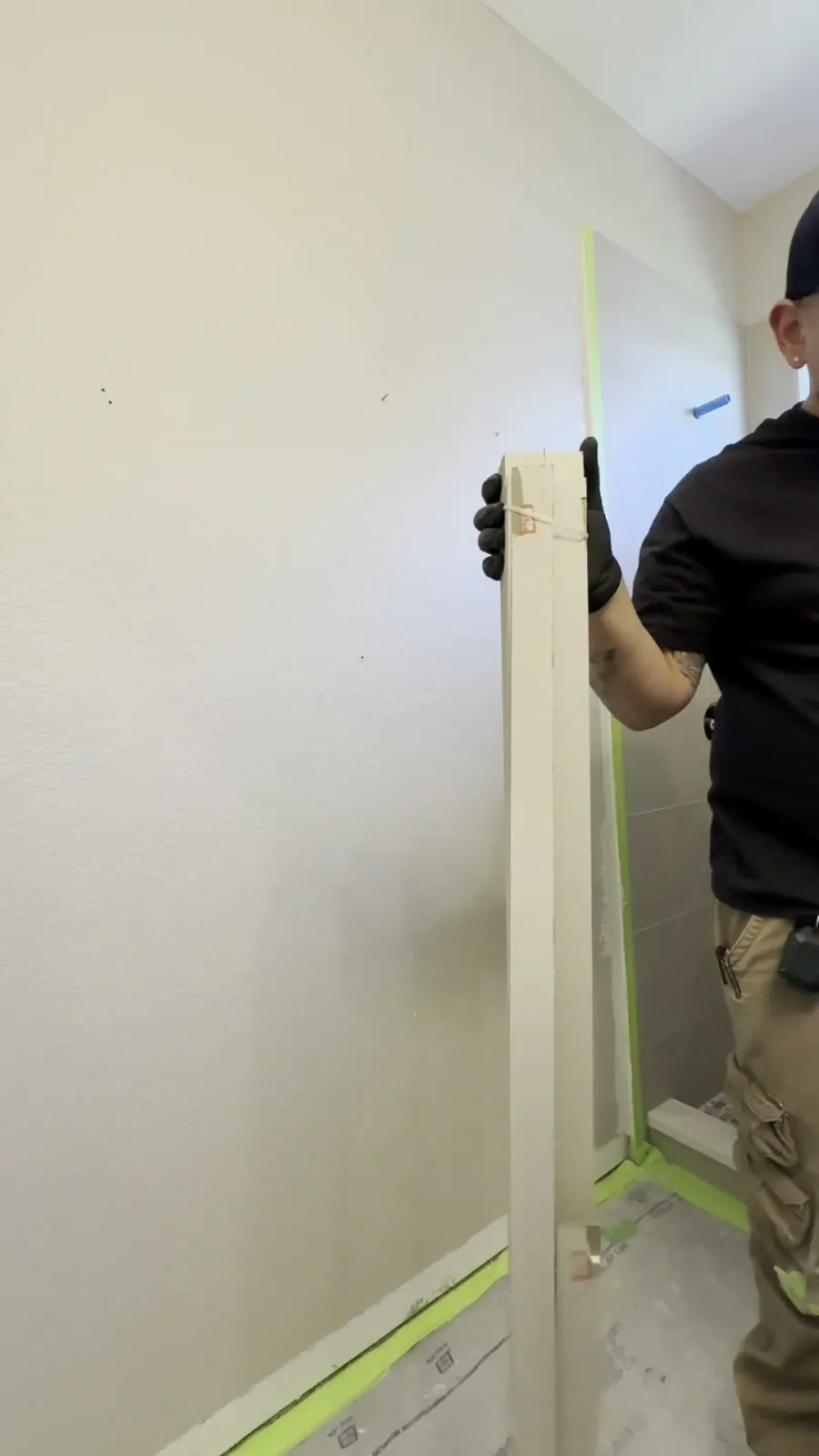
Hold a long straightedge flat against a wall and look at the gap behind it. On a wall that is ready for tile there is barely one. On plenty of walls in plenty of houses, you can fit your fingers in there.
On a recent tub-to-shower conversion the gap measured right at half an inch. For scale, the tile going on it was an eighth of an inch thick, so the wall was out by four times the thickness of the material meant to cover it.
Tile does not hide a bad wall. It reports it.
Large-format tile is rigid and flat, and a flat thing laid across a curved thing tells you immediately. You get lippage at the edges where one tile stands proud of its neighbor, grout lines that open and close along their length, and, in the worst case, hollow spots where the tile never fully bedded, which crack later under a dropped shampoo bottle.
None of that is a tiling mistake. It is a wall that was never corrected.
Two ways to fix it, and only one is realistic
The thorough option is to strip the drywall off entirely and shim the studs back to plane. It works, and on a wall that is badly out or structurally odd, it is the right call.
The practical option on most bathrooms is to float the wall: build the low areas up until the whole plane is true. Drywall shims go on first to take out the bulk of the deviation, then fiberglass mesh tape over the joints, and that becomes the first layer.
Then the whole wall gets skimmed
Not just the repaired area, but the entire wall. Trying to blend new compound into existing texture is a losing game; you can see the patch under any light that rakes across it. So the whole surface gets skimmed, sanded flat with a drywall sander, and given another coat. Usually two more.
Where texture is called for, it gets sprayed fresh across the whole plane rather than feathered into the old finish, so there is one texture on the wall instead of an old one and an approximation of it.
We're not gonna try to match the pre-existing texture.
Why this takes days, not hours
Each coat has to dry before the next one goes on, and in a San Antonio summer that is genuinely weather-dependent: heat helps, humidity does not, and a humid week can add a day.
It is the least photogenic stage of a bathroom remodel and one of the most consequential. When somebody asks why a shower took longer than they expected, this is very often the honest answer: the tile was never the hold-up, the wall behind it was.