Bathroom
We seal grout that already has sealer in it
Most modern grout ships with an additive that technically waterproofs it. That is not the same as keeping it the color you chose.
Written by TEXAN Home Improvements
2 min read
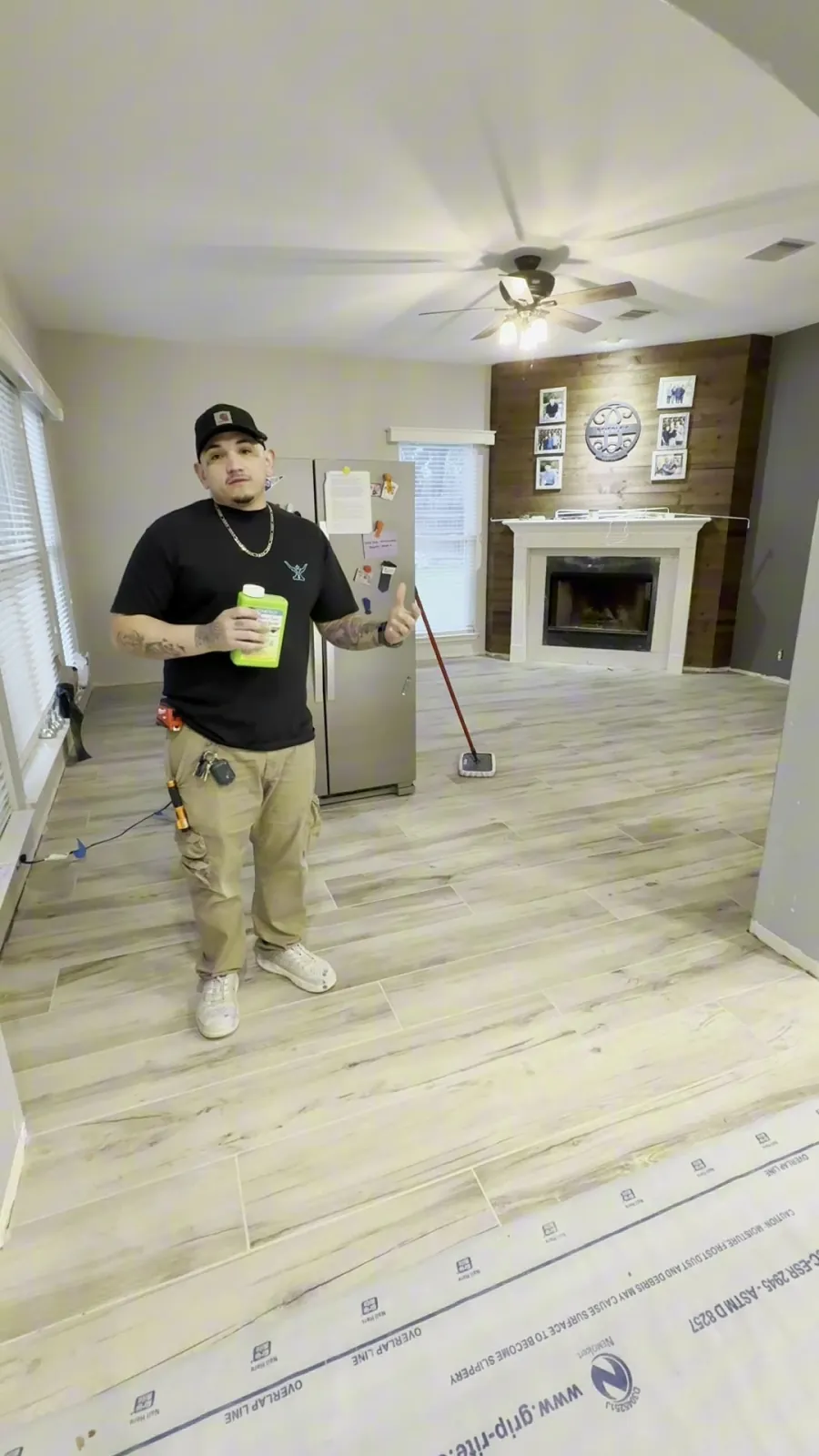
There is a step at the end of a tile job that is easy to skip and awkward to add later. It is also the step most likely to be quietly left out of a cheap quote, because nobody inspects for it and the difference does not show for a year.
Cured, not dry
Sealer does not go on until the grout is fully cured. Dry and cured are different states. Grout can feel dry to the touch and still be releasing moisture, and sealing at that point traps what is left underneath.
So the sequence is grout, wait, move everything out, sweep the floor properly, then seal. The sweeping matters more than it sounds, because anything left on the surface gets sealed under the coat.
The additive is not the same as a sealer
Most modern grout carries an additive that technically seals it, and plenty of installers stop there, reasonably enough, because the manufacturer says it is sealed.
The distinction is what you are protecting against. The additive is largely about water. A dedicated sealer on top is about color. On a light grout the thing that ruins the look is not water damage, it is gradual staining, and the difference between grout that still matches the tile after two years and grout that has gone gray along the traffic lines is usually this coat.
Worth asking about
If you have chosen a pale grout, and pale grout is having a long moment, ask a contractor directly whether a separate sealer coat is included and which product they use. It is a small line item and it decides whether the floor still looks like the one you picked.