Remodeling Process
Compare the Work Before You
Compare the Price
A quote is a list before it is a number. Two quotes for the same kitchen can arrive far apart and both be honest. What separates them is often what each one does not say.
Written by TEXAN Home Improvements
4 min read
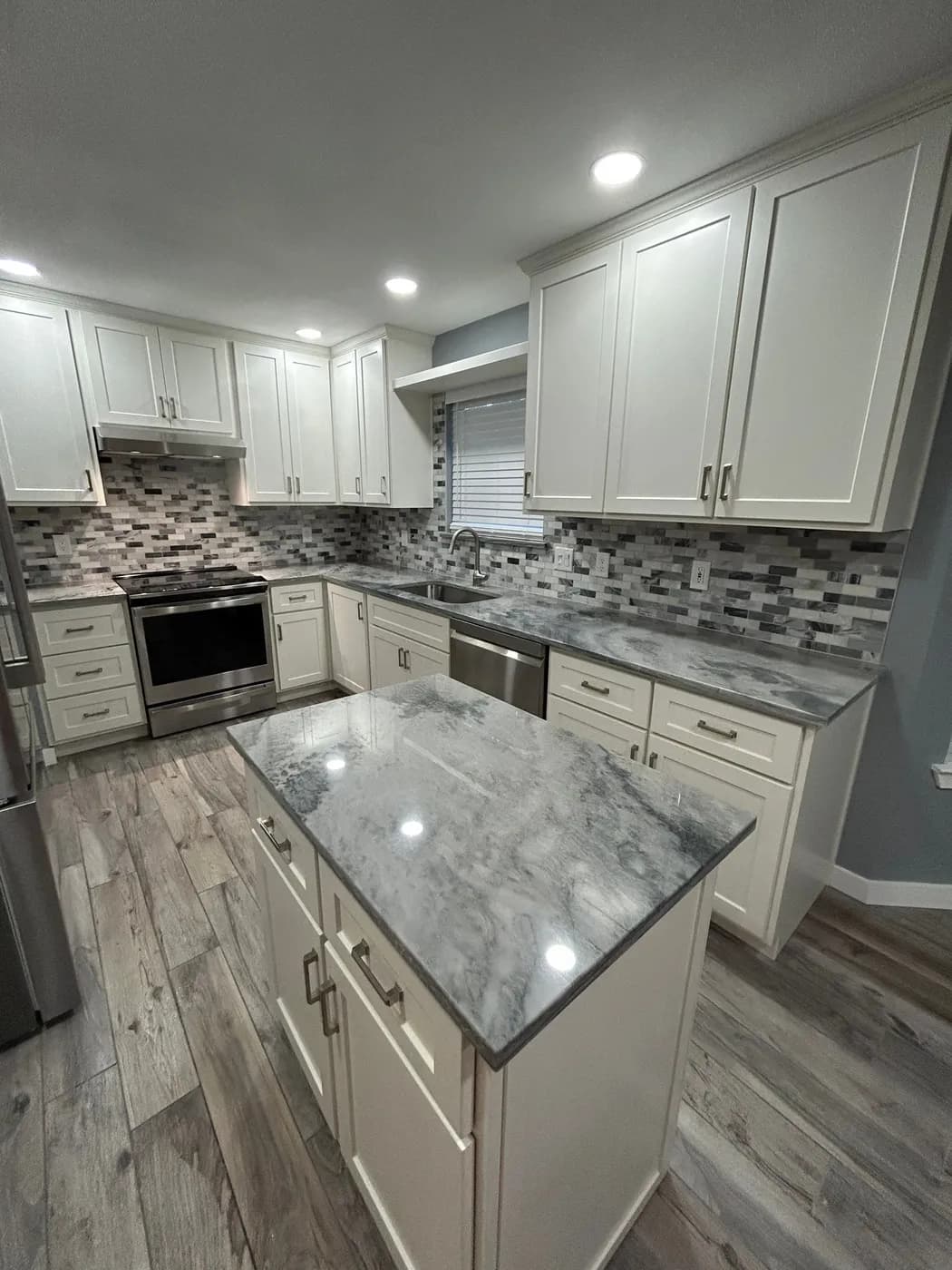
Two contractors walk the same kitchen. One comes back at one number and the other comes back lower, and the instinct is to read that gap as the same job at two prices — one of them greedy, one of them a bargain.
It is often neither. A good deal of the time the two quotes are not describing the same job, and the number is the last thing that will tell you so.
Read both as a list of work
Put the two quotes side by side and leave the money out of the first pass entirely. Read each one as a list of tasks. Write down everything that appears on one and not on the other.
That list is what you are actually choosing between. If the shorter quote is also the cheaper one, look closely at what may be missing before treating the difference as savings.
On remodeling projects, we regularly see scope differences that are not obvious from the total at the bottom of an estimate. One proposal may include demolition, disposal, protection and finish work while another leaves some of those items outside the quoted scope. That is why we recommend comparing the work described before comparing the final number.
Allowances are the number that moves
An allowance is a placeholder — a budgeted figure for something you have not picked yet. Tile, fixtures, countertops and hardware are often quoted this way.
Two quotes can carry very different allowances for the same category, and the lower one will produce a lower total while describing the same finished room. Ask what the allowance buys in practice, and ask what happens to the price when you choose something above it.
If a quote carries no allowances, ask whether the selections are already fixed, included to a stated specification, contractor-selected or excluded from the price.
What is not written is not included
Exclusions are where quotes diverge quietly. Worth checking by name, because each is real work somebody has to do: demolition and haul-off, floor and surface protection through the rest of the house, permits and inspection fees, paint, trim and touch-up after the trades finish, moving or reworking whatever turns up behind a wall, and the final clean.
If permits are not mentioned on either quote, ask both contractors who pulls them and whether the fees are included. It is a fair question, and the answer tells you something about how the job will be run.
The payment schedule shows how the job is structured
A deposit followed by payments tied to visible milestones is a different proposition from a large sum up front. You are not only reading payment terms — you are seeing which milestones trigger payment and what work is expected to be completed before the next payment is due.
Change orders are the price of a decision you have not made yet
Change orders are common in remodeling, particularly when existing conditions cannot be fully seen before work begins. What matters is whether the quote says how a change gets priced and approved before the work happens. A quote that is silent on change orders is not a quote without change orders.
Ask who is actually doing the work
Ask which parts of the project the contractor's own team handles and which are subcontracted.
Electrical, plumbing and heating-and-air work are regulated trades, so ask who will do that work and check the license yourself rather than taking a number at face value. Electricians and air-conditioning contractors are licensed by the Texas Department of Licensing and Regulation, and plumbers by the Texas State Board of Plumbing Examiners. General remodeling works differently: Texas has no single statewide license that covers it, which is why local rules matter.
Inside San Antonio city limits, the City's Development Services Department says a building permit is typically required to remodel or repair, with a published list of exceptions, and new electrical, plumbing and HVAC work must be done by licensed trade contractors. Contractors register with the City before they can pull permits there. Other cities set their own requirements, and what a given job needs depends on its scope. Ask who is responsible for each permit and who will schedule the inspections.
Ask for proof of current insurance as well. None of this is adversarial. It is reasonable diligence for anyone who will be working in your house for weeks.
A timeline is a scope item
A quote or proposal that explains the expected order of work gives you more information about how the contractor intends to sequence the job. A quote with one date and no sequence leaves you to take that on trust. The gaps between trades are often where schedules slip — and you can read something about what that is like to live through before you sign either one.
What to do with the list
Take your list of differences back to both contractors and ask each to quote the same scope. Some will. That is the point: not to find the cheaper contractor, but to learn what each was proposing to do, so that the number finally means the same thing on both pages.
The cheaper quote is sometimes genuinely the better deal. You cannot know that until both quotes describe the same job. The order we run work in is a reasonable thing to ask any contractor to put in writing.