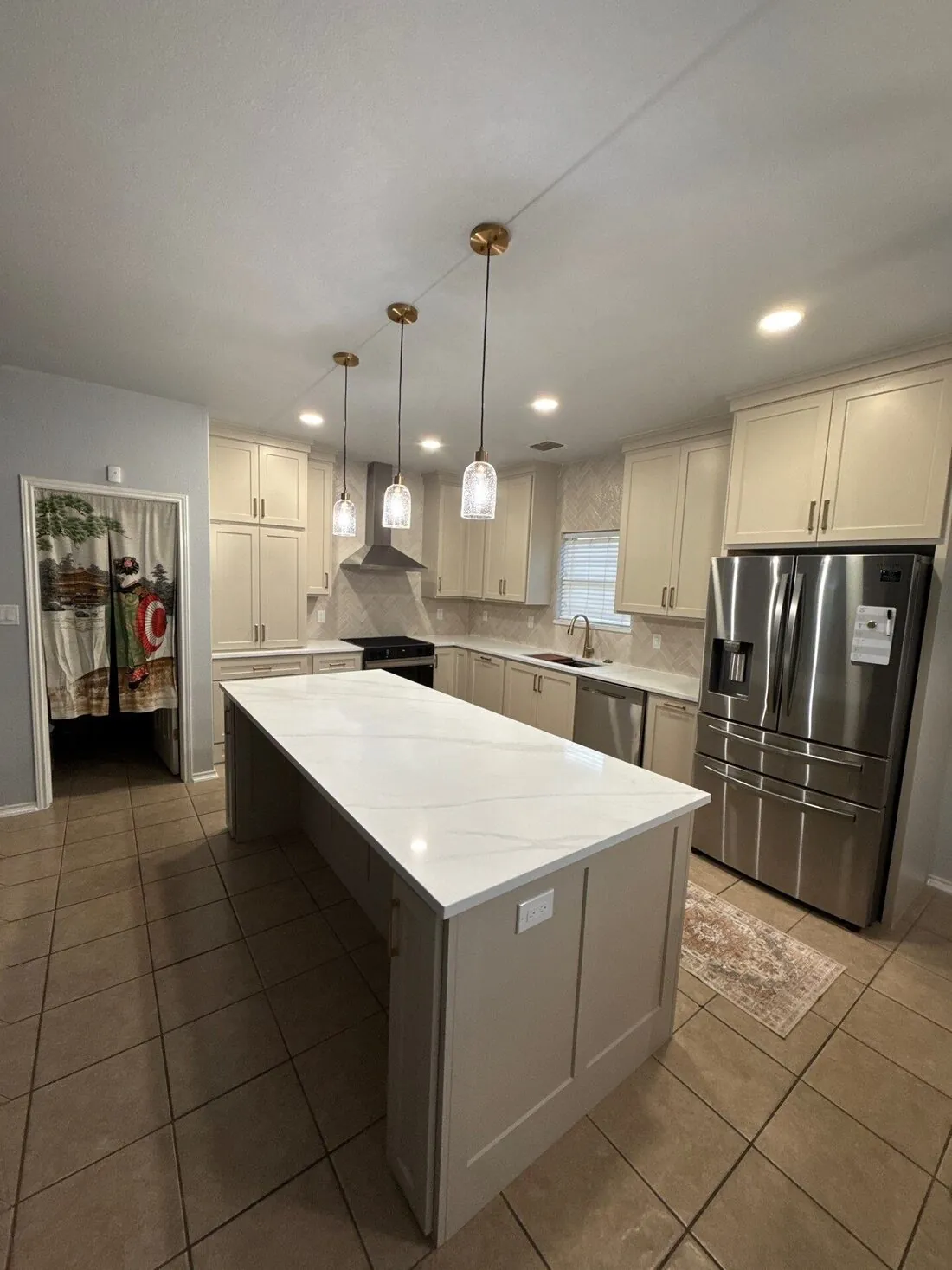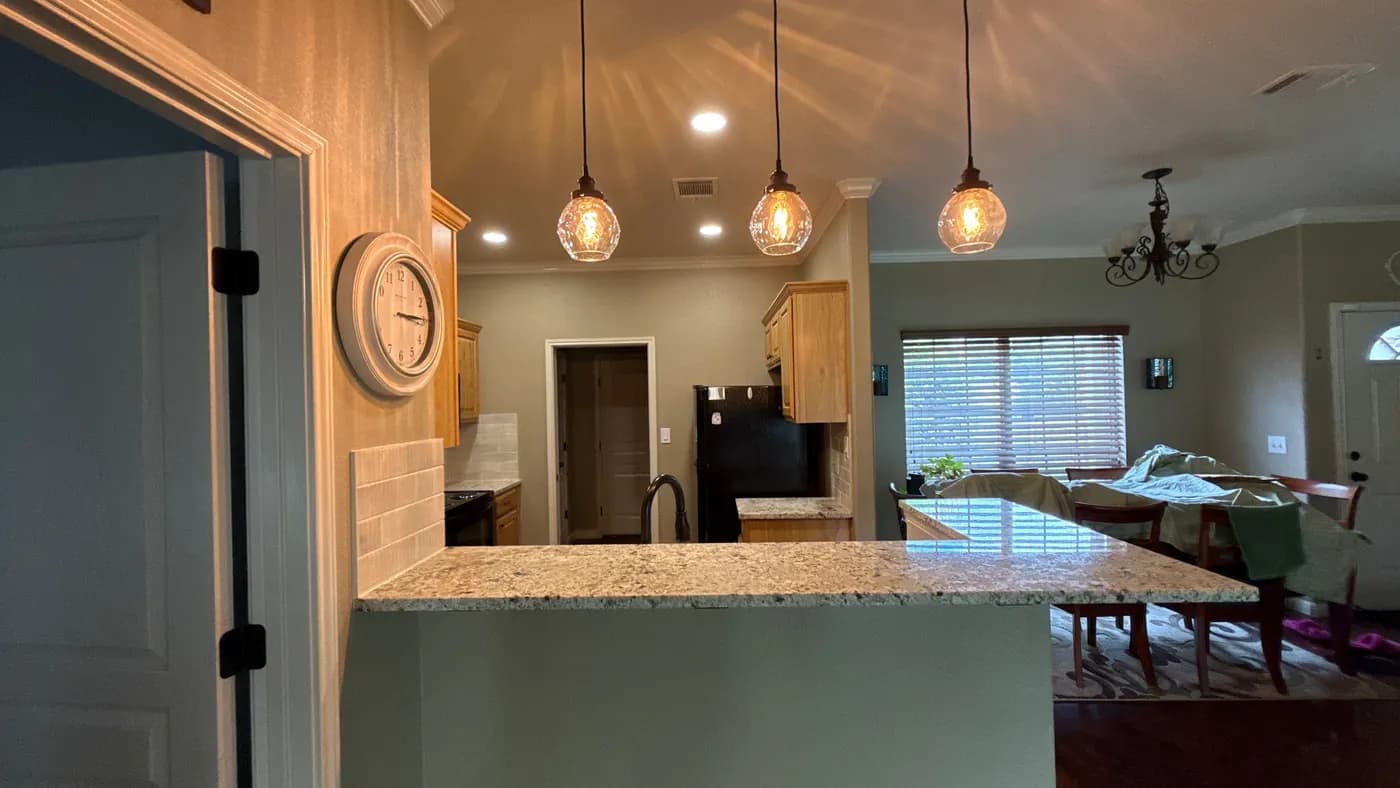
Kitchen
Why your kitchen sits empty for a week before the cabinets show up
Demo is fast and dramatic. What follows looks like nothing is happening, and it is the part that decides whether the cabinets sit right.
Written by TEXAN Home Improvements
4 min read
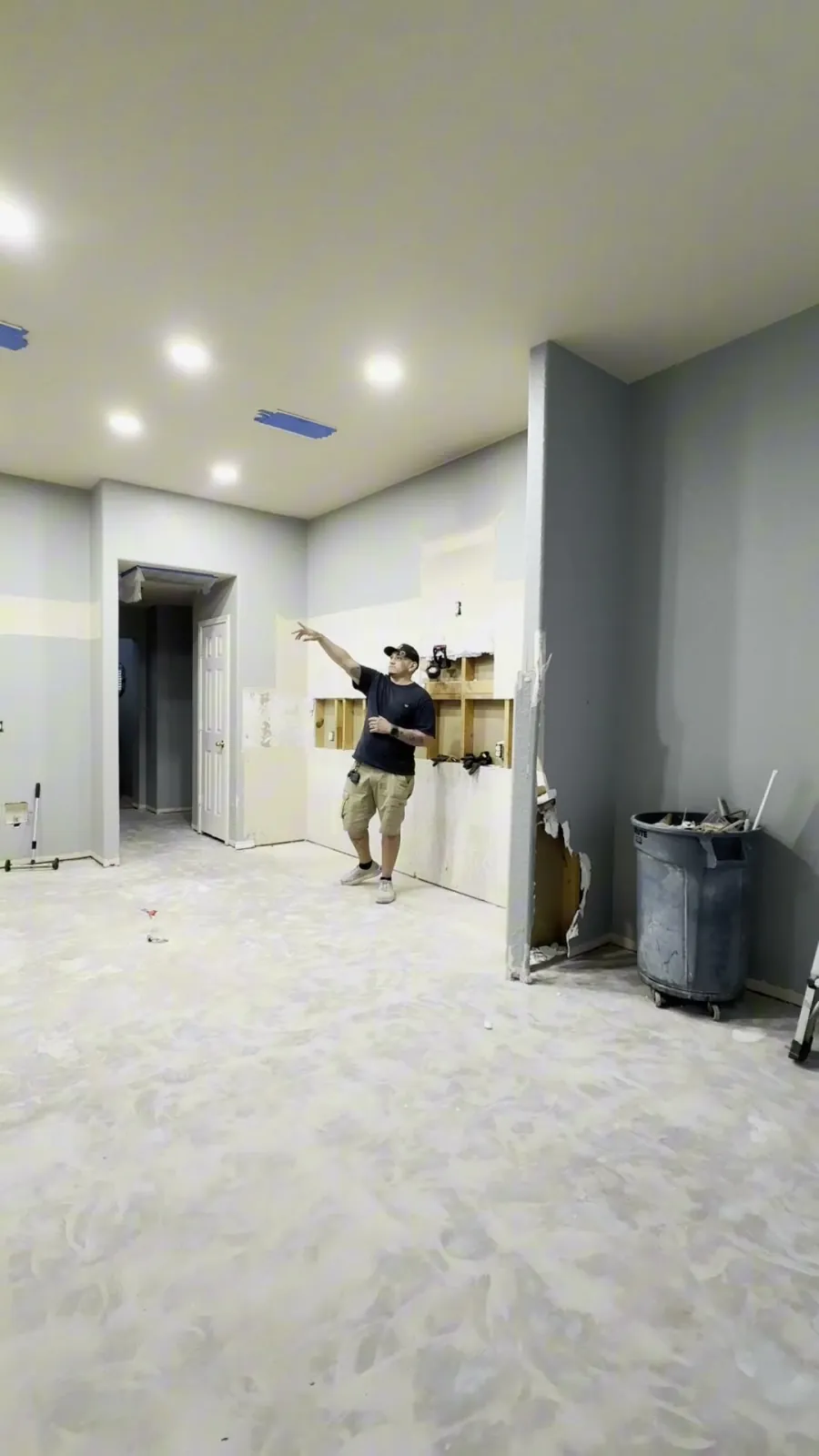
Kitchen demo is the part everybody films. In a single day the backsplash comes off, the upper cabinets come down, the lower cabinetry and the countertops go out to the trailer, and a room you have cooked in for fifteen years is suddenly a shell.
Then, for about a week, it looks like nothing happens. Homeowners get nervous right around here. So here is what that week is actually for.
Lighting gets decided before the walls close
Electrical is the first thing in, because it is the last thing you can change cheaply. On a recent remodel that meant deleting a chandelier over the island and putting a canned recessed light in its place, adding one directly over the sink, and adding two more over the dining table.
The circuits on that job were run by Good Times Electric, the electrical contractor we bring in when a kitchen needs more than a like-for-like swap. Moving a can over a sink is a short conversation while the wall is open, and a licensed callback once it is closed.
None of that is visible in a finished photo. All of it is impossible to move once the drywall is up and textured.
Old drywall does not get reused
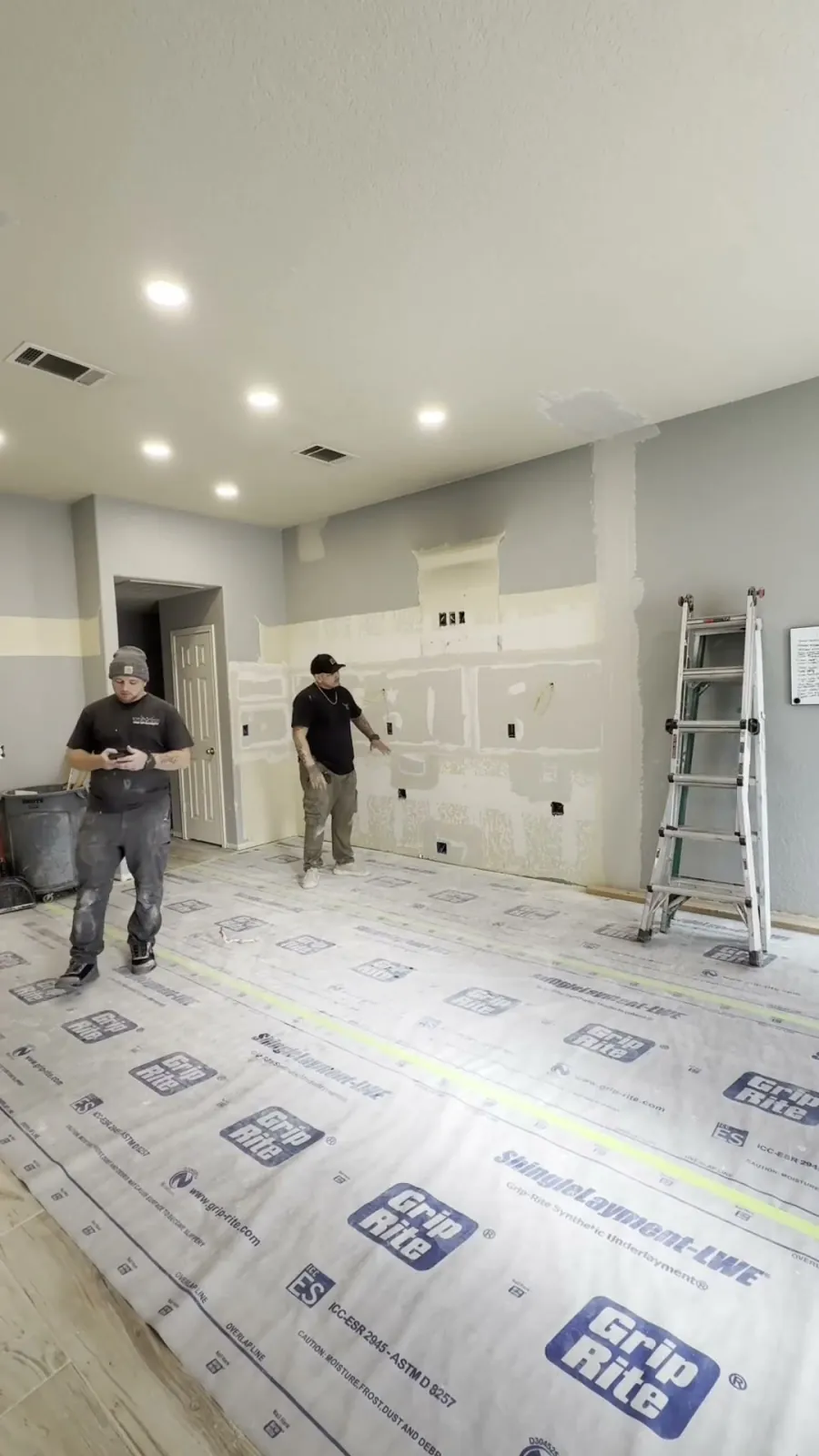
Where a wall comes down or a section gets opened up, the edges get cleaned and new board goes in. We do not patch new work into old board that has been cut around a cabinet run for a decade. It telegraphs through the finish, and you see it in every raking light for the rest of the time you own the house.
This is also when the small things get dealt with. On that same job a dog gate the homeowner no longer wanted came out, and the tile around the fireplace came off so the new backsplash tile could carry through both spaces and read as one continuous material rather than two rooms that almost match.
We never reuse the old drywall.
Texture, prime and paint, then cabinets
Once the board is hung, it still has to be textured, primed and painted before a single cabinet arrives. Cabinets going in against unpainted walls means cutting in around finished boxes later, and that is how you end up with paint lines you notice every morning.
Texture does not go everywhere, though. Anywhere a backsplash will cover, or where a full-height pantry cabinet will land, does not need it. That is finish work nobody will ever see, on a surface that is about to be hidden. Ceilings are the opposite: those get full attention, because a ceiling is the one plane in a kitchen with nothing on it to distract your eye.
So why the quiet week?
Because the quiet week is the one that determines whether your cabinet doors line up, whether your countertop sits flat, and whether the finish looks like one room or a repair. Demo takes a day and looks like progress. The week after takes longer and looks like nothing, and it is the part you are actually paying for.