Flooring
The floor is the statement
Carpet and tile are answers. So is turning the slab itself into a glass-smooth, metallic surface. Here is what that actually involves.
Written by TEXAN Home Improvements
3 min read
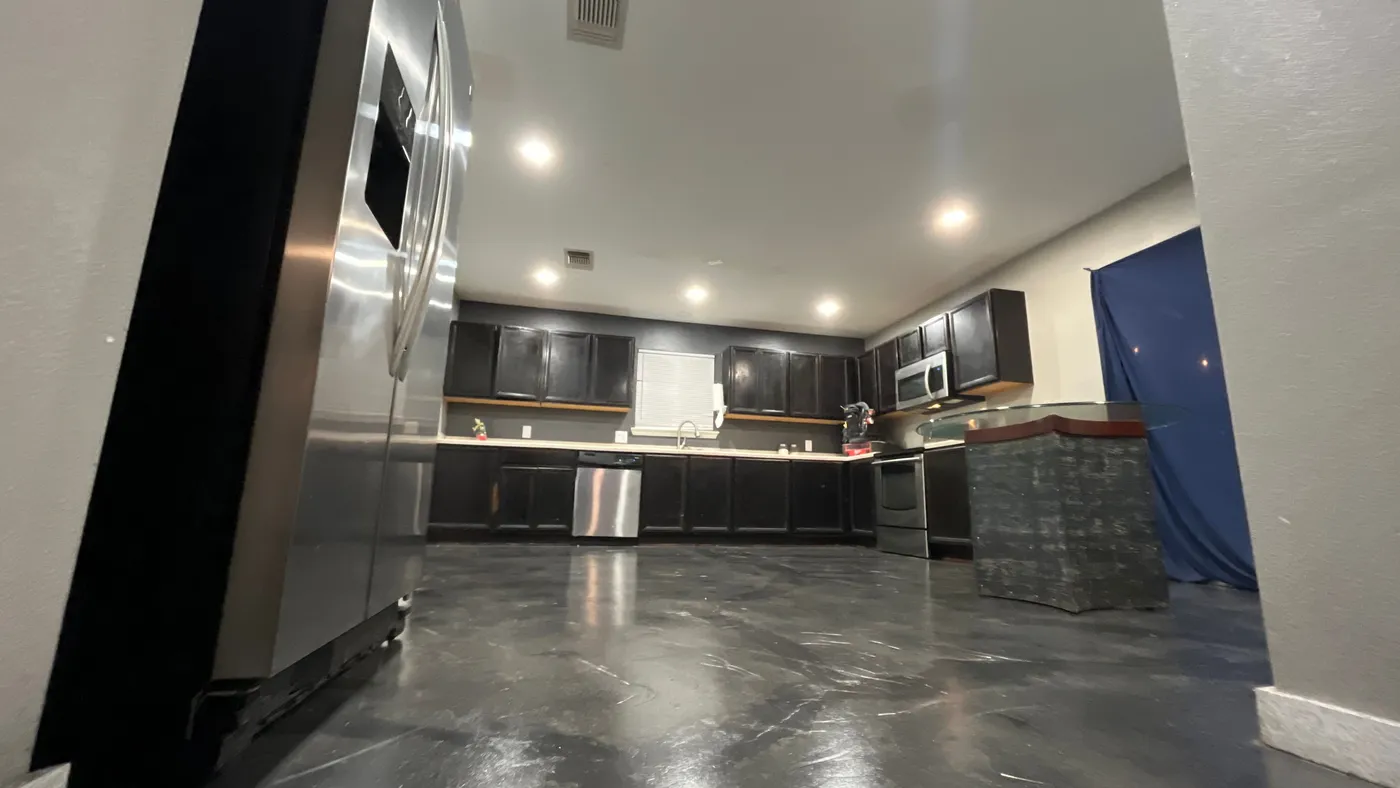
Most flooring conversations are about what to put over the slab. In this Cibolo home, the answer was the slab itself, coated in metallic epoxy until it reads as one continuous, glass-smooth surface from the kitchen through the living areas.
What a metallic epoxy floor is
Epoxy is poured and worked across the prepared concrete, and metallic pigment moved through it gives the surface depth: the finish shifts as you walk past it, closer to polished stone than to paint. There are no grout lines, no plank seams, no transitions between rooms. One surface, wall to wall.
The trade-offs are honest ones: the slab must be properly prepared or the coating fails, the pour is committed work with no mid-course corrections, and a floor this reflective shows everything, which is exactly why it pairs with the next decision.
The lighting is half the floor
A reflective floor is only as good as what it reflects. Recessed lighting went in overhead as part of the same visit, and the effect compounds: the cans read once in the ceiling and again in the floor. A dated fixture would have been doubled the same way, because dark, glossy surfaces do not forgive lighting an ordinary floor would hide.
The second visit: a wall built for the TV
The same home later got a media wall built from scratch: framed in timber, wrapped in stained slat wood, with the TV inset flush and an open bay below for the electronics. The framing stage is where all of it is decided (every shelf, every cable path, the exact TV cavity), because once the slats go on, the wall is finished furniture.
Dark floor, charcoal walls, warm slats. Different visits, one direction, and proof that a home improvement project does not have to be a whole room to change how the whole room feels.
Planning other home improvements?
See what the process could look like for your home.
Book a Walkthrough