Flooring
Self-levelling compound does not level itself
The name promises you can pour it and walk away. On a slab that was an inch and a half out, here is what the two days around that pour actually looked like.
4 min read
The name does most of the damage. Self-levelling compound sounds like a product that does the job for you: mix it, pour it, come back to a floor that is flat. It is genuinely good at finding its own level, and it will fill a low spot far more evenly than anyone could trowel it. But the pour is one step in the middle of a two-day sequence, and almost everything that decides whether it works happens either side of it.
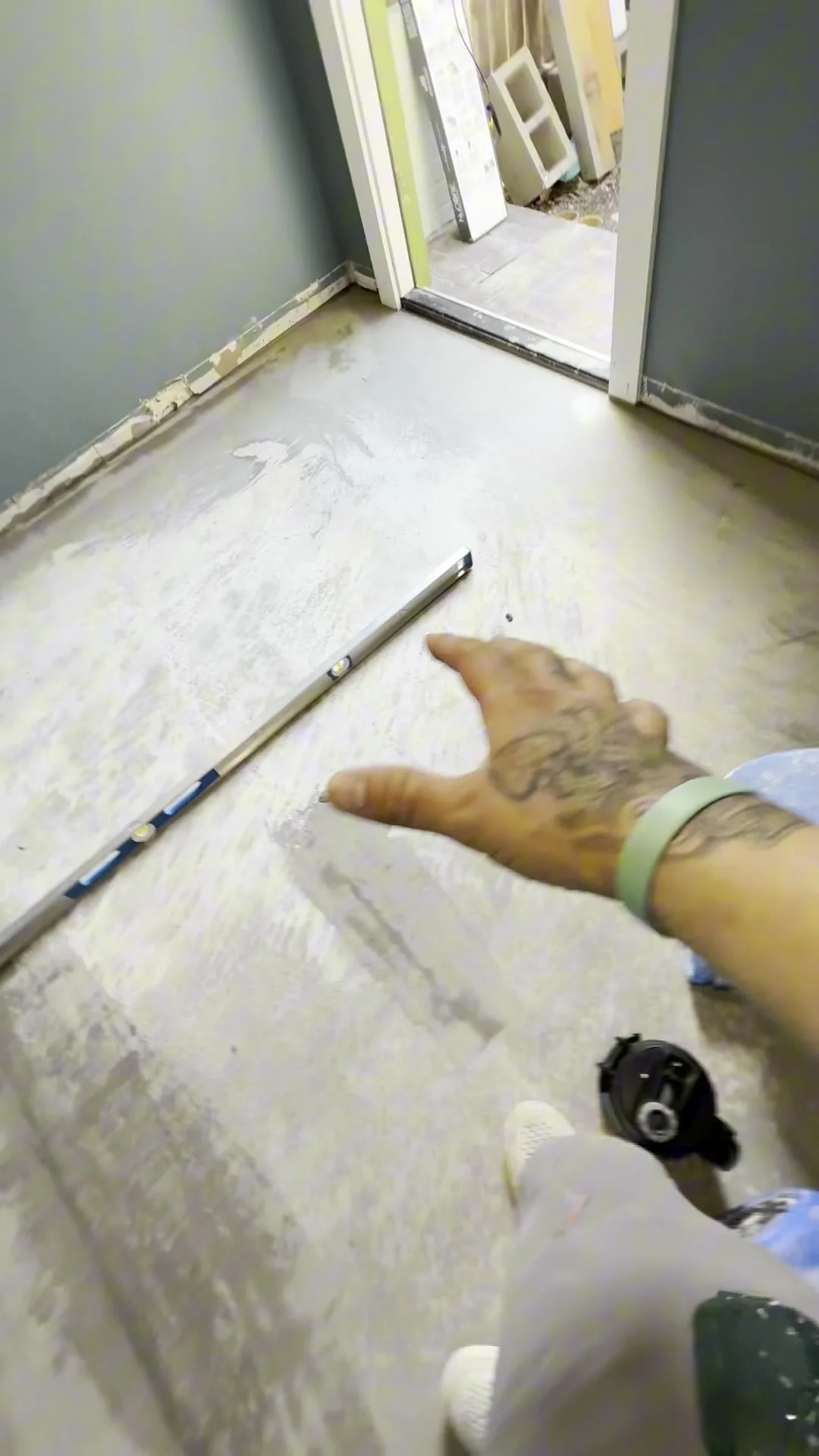
On a recent outbuilding conversion the slab was an inch and a half out from one side to the other. That is not a subtle dip you could ignore under thick flooring — it is a slope you would feel walking across the room.
The day before the pour
Primer goes down first, and not immediately before. On this job the concrete primer was poured and rolled out the day before the compound went anywhere near the floor.
The reason is specific, and it is the kind of thing that sounds optional right up until it goes wrong. Bare concrete is thirsty. Poured onto an unprimed slab, the compound has its water pulled straight down into the substrate, which leaves the slab damp and the compound short of the water it needed to flow and cure properly. In the owner's own words on the walkthrough, the primer is what stops the concrete being able to suck in the moisture and keep it damp.
The numbers are on the bag, not in a rule of thumb
The mix on this job called for one gallon of water per bag, and the product used — a Sika self-leveller — is rated to be poured up to two inches thick in a single application.
Both of those belong to that product. A different compound will want a different ratio and a different maximum lift, and the bag is the authority, not anything you read here. The useful part for a homeowner is not the numbers themselves but what they imply: there is a ceiling on how much a single pour can correct, and an inch and a half of fall is already most of the way to it.
It still has to be moved
This is the part the name hides. The compound does not distribute itself across a room — it is poured and then worked, in this case pushed out with a long screed to get it where it needs to go before it starts to set.
And it is a committed pour. Mix and place enough to cover the area, because there is no pausing halfway. On this job they ran short near the end of a run, and the last stretch went down as a thin layer that kicked up rather than flowing flat.
Which is fixable, and worth knowing how
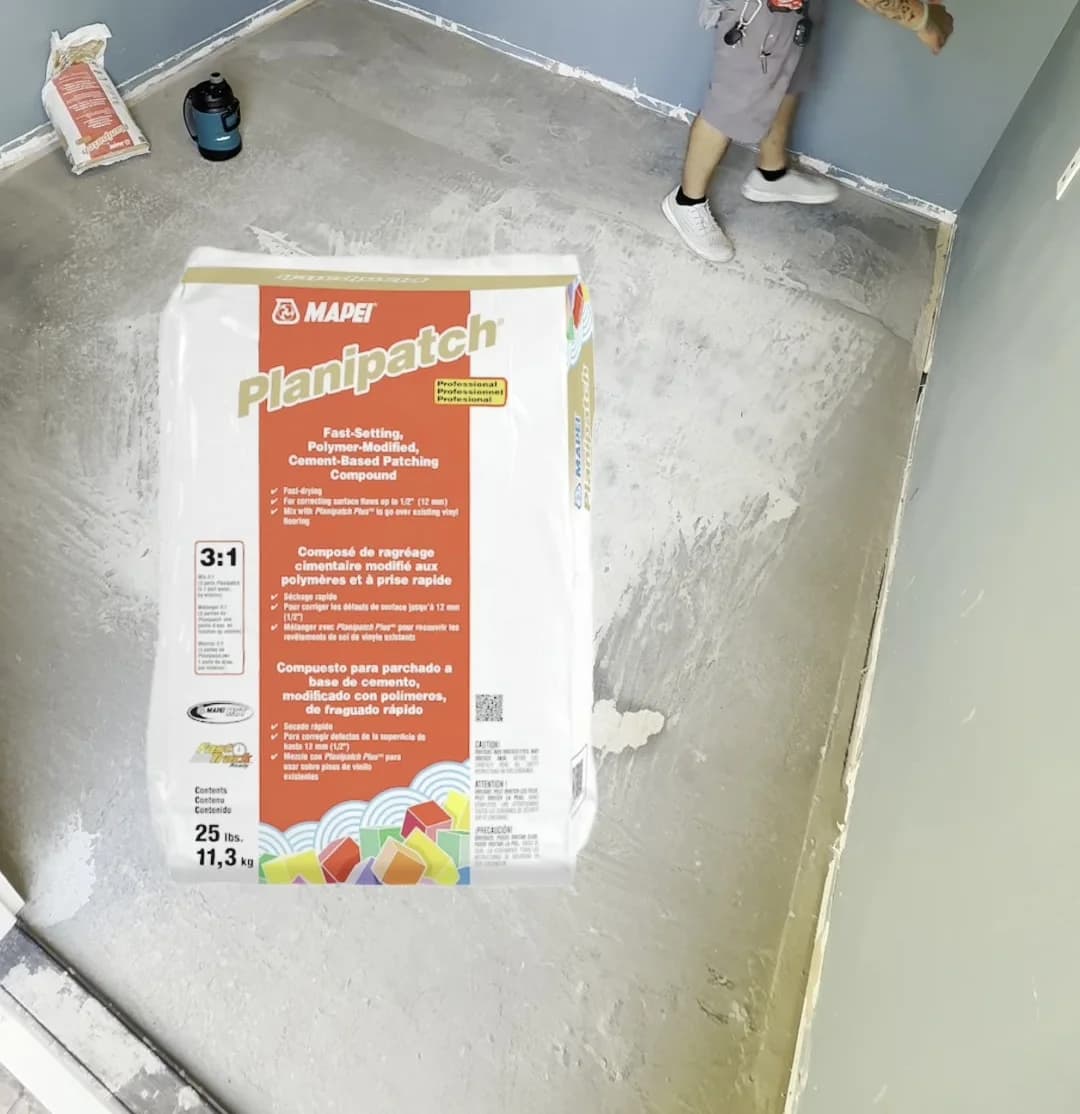
The repair is a floor patching compound — a different product from the self-leveller, fast-setting by design, floated out over the thin area and smoothed flush. It sets in minutes rather than hours, which is the whole point of it: a patch that took as long as the original pour would cost another day.
That is the honest version of this work. A pour running short is not a disaster and it is not rare; it is a normal thing that gets corrected the same afternoon. It is also exactly the sort of detail that never appears in a finished photograph, which is why the floor in the photograph looks like it went down in one clean pass.
Walkable is not cured
The pour firms up fast. On this job the crew were gone for about an hour and came back to a surface already hard enough to walk on, which is quick enough to feel finished.
It is not finished. Walkable and cured are different states, and the water still has to come up and out of it. Nothing goes on top until that has happened — and on this build what goes on top is a moisture barrier first, then the flooring. Laying either of those over a slab that is still releasing moisture is how you get a floor that warps, lifts or fails at the adhesive a year later, having looked perfect on the day.
What to ask about
If you are having flooring put down over a slab, the useful question is not what the flooring costs. It is what is happening to the slab underneath it, and how many days that takes.
Ask whether the floor is being levelled at all, and if it is, ask whether there is a priming day before the pour and a curing wait after it. Those two waits are the schedule, not padding in it. A quote that puts levelling and flooring on the same day is describing a different job from the one that lasts.
Planning other home improvements?
See what the process could look like for your home.
Book a Walkthrough